A home-office privacy upgrade that still feels like “winter light” in Boise
If your home office door has glass (full lite, half lite, or sidelights), you’ve probably felt the tradeoff: leave it clear and lose privacy, or add a cover that makes the room feel darker—especially during Idaho winters when natural light is a mood-lifter. A well-chosen frosted film for an office door gives you the privacy you want while keeping the door bright and modern, and it’s one of the cleanest “non-permanent” upgrades you can make to existing glass.
What frosted film actually does (and why it works so well on doors)
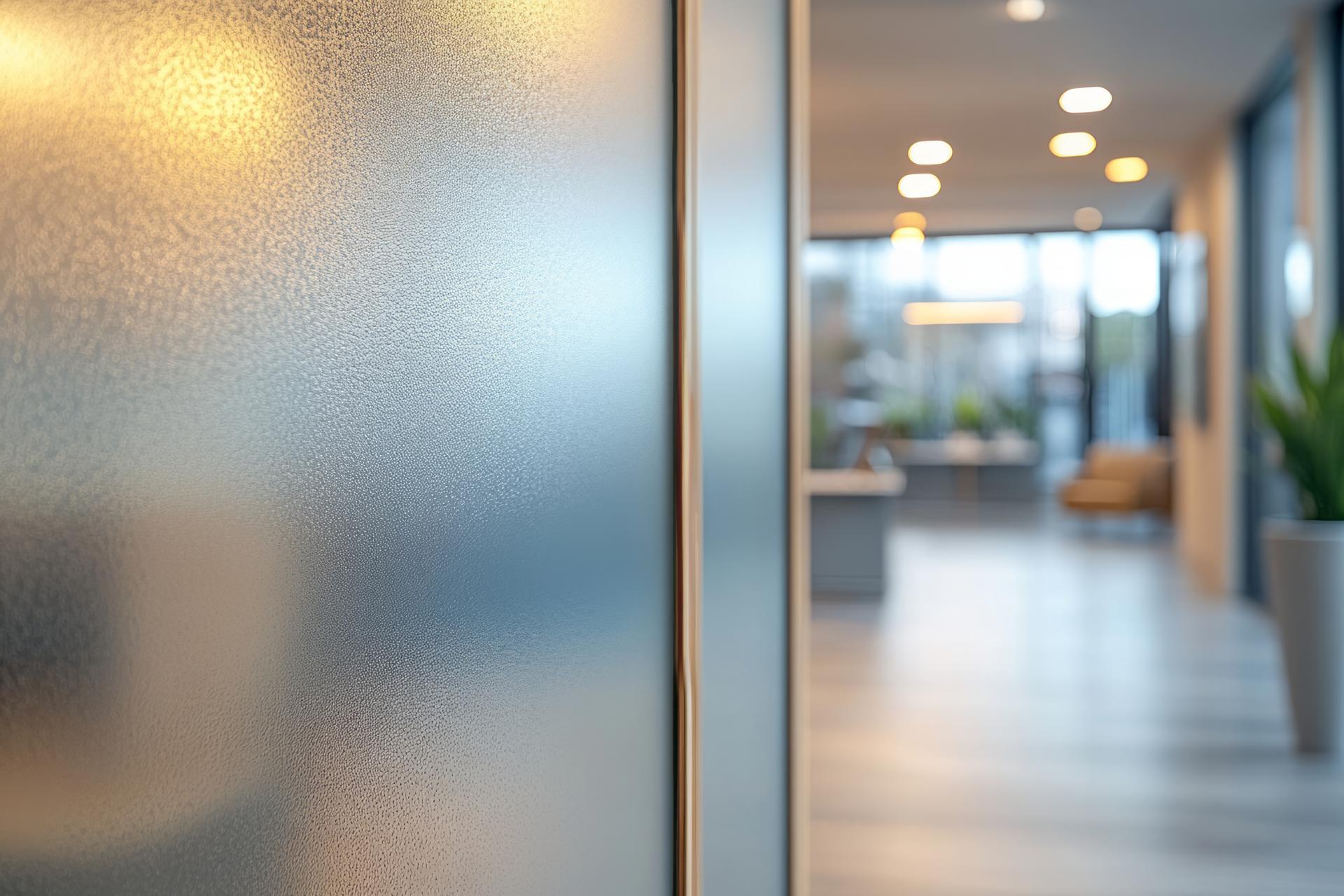
Frosted and etched-look films are designed to diffuse light rather than “darken” the room. Instead of blocking daylight the way heavy curtains or blinds can, the film scatters incoming light so you still get a bright space—just without crisp visibility through the glass. This is why frosted film is popular for interior office doors, conference rooms, and glass partitions where privacy matters, but the open, airy feel matters too.
Privacy reality check (especially after dark)
Frosted film is excellent for everyday privacy, but it’s not “magic invisibility.” If someone is very close to the glass, you may still see soft shapes or shadows depending on the film’s opacity. Many “heavier” frosts increase privacy, while lighter frosts prioritize brightness.
Choosing the right frosted film for a home-office door
Not all frosted films look the same. The best option depends on (1) how much privacy you want, (2) how much light you want to keep, and (3) whether you want a “true etched-glass” look or something more decorative.
1) Pick your privacy level (light vs. obscurity)
A useful way to think about frosted film is in “light / medium / heavy” tiers. Higher visible light transmission keeps things brighter, while lower transmission increases privacy. Some manufacturers describe options around ranges like ~90% (light), ~60% (medium), and ~30% (heavy) visual light transmission.
2) Decide if you want full coverage or a “banded” layout
For home offices, a banded design often looks the most intentional: a frosted band across the center of the glass (privacy where people see), with clear glass above/below to keep the door feeling open. Full coverage is great for maximum privacy, especially if your desk faces the door.
3) Match the style to the rest of the home
Clean, modern homes tend to look best with a simple etched/frosted finish. If you’re design-forward, reeded, linen, geometric, or subtle patterns can look custom—without committing to a remodel.
How installation works (and what to expect after)
Professional architectural film installation uses a wet application method and a squeegee process to set the film and push out solution. It’s normal for film to take a little time to fully cure and reach final clarity/adhesion—especially in colder months. Industry inspection guidance also notes that applied film won’t present the exact same visual uniformity as bare glass, and that cure time is part of the process.
Step-by-step: getting the best result on an office door
Step 1: Confirm the glass type. Interior doors are often tempered. A pro will identify glass type and any existing coatings or texture that can affect adhesion.
Step 2: Choose coverage and edges. Decide between full frost, a center band, or a custom layout (useful if you want privacy at seated height for video calls).
Step 3: Prep and clean correctly. Dust, paint specks, and residue are the enemy of a crisp finish.
Step 4: Install and align. Doors are very “eye level,” so straight lines and clean borders matter more than on high windows.
Step 5: Follow aftercare. Avoid aggressive cleaning until the cure is complete, then maintain with film-safe methods.
Comparison table: frosted film vs. other privacy options
| Option | Privacy | Keeps Natural Light | Look & Maintenance | Best For |
|---|---|---|---|---|
| Frosted film (etched look) | High (varies by opacity) | High (diffuses light) | Clean, modern; wipe-down care | Home office doors, interior glass |
| Curtains or fabric panel | High | Low to medium | Can look temporary; dust collects | Quick cover-ups, rentals (depends on setup) |
| Blinds (mini or roller) | Adjustable | Adjustable | More hardware; more cleaning | When you want open/close control |
| Replace with frosted glass | High | High | Permanent; higher cost & disruption | Full remodels, long-term renovations |
Boise-specific comfort notes: winter glare and “bright but private” spaces
In Boise and the Treasure Valley, winter sun can sit low and feel surprisingly intense on screens—especially in the morning or late afternoon. Frosted film on an office door (or nearby interior glass) won’t replace a dedicated glare-control film on exterior windows, but it does help soften harsh light paths and reduce the “fishbowl” feeling in open hallways. If you’re building a calmer work-from-home setup, pairing privacy film on interior doors with targeted window film on the sunniest exterior panes is often the best comfort-first approach.
Want deeper guidance on film options around the home? Visit our Guide to Residential Window Film.
Care & cleaning: keep frosted film looking crisp
Most issues people have with privacy film aren’t “film problems”—they’re cleaning problems. Avoid harsh or ammonia-based cleaners and abrasive tools. A mild soap-and-water mix and a soft microfiber cloth are a safe baseline, and many film-care guides recommend ammonia-free options to protect the film surface.
Quick maintenance checklist
Do: microfiber cloth, gentle pressure, film-safe cleaner, squeegee for streak-free drying.
Don’t: ammonia-based sprays, abrasive pads, razor blades, or “scrub until it’s perfect” habits.
Tip: if you’re also cleaning nearby surfaces with stronger products, keep them off the film and rinse/wipe overspray promptly.
For homeowner-friendly prep and aftercare expectations, see: Before Window Tinting and After Window Tinting.
Ready for a cleaner-looking office door (with real privacy)?
Meridian Window Tint serves Boise, Meridian, Eagle, Nampa, and surrounding areas with residential and commercial window film solutions—ideal for home offices, glass doors, sidelights, and interior partitions.
FAQ: Frosted film for office doors
Will frosted film still let light through?
Yes—most frosted films are intended to diffuse light rather than block it. You’ll still get a bright doorway glow, just without a clear view through the glass.
Can people see through it at night?
With interior lights on, you typically won’t get a clear view, but you may see soft shapes/shadows—especially if someone is close to the glass. If you need maximum privacy around the clock, choose a heavier frost or full-coverage design.
Is frosted film “non-permanent”?
Many decorative/privacy films can be removed later, but the ease of removal depends on the film type and how long it’s been installed. If “easy removal” is a priority, talk through options upfront so the product and install approach match your goals.
How do I clean frosted window film on a door?
Use a soft microfiber cloth and a mild soap-and-water solution or a film-safe cleaner. Avoid ammonia-based cleaners and abrasives that can dull or scratch the surface.
How do I get an accurate quote for an office door?
Measurements, glass layout (full/half lite), and the design (full coverage vs. band) all affect pricing. If you’d like to prep details before calling, use our guide: How to Measure Windows.
Have more questions? Our Window Film FAQs page covers common concerns about film performance, installation, and expectations.
Glossary (helpful terms when shopping for frosted film)
VLT (Visible Light Transmission): A percentage that describes how much visible light passes through the film. Higher VLT = brighter; lower VLT = more privacy/opacity.
Diffusion: How a film scatters light to soften glare and reduce clear visibility through glass while maintaining brightness.
Cure time: The period after installation when remaining moisture dissipates, and adhesion/appearance continue to improve.
Wet application method: An installation method that uses a solution to position the film and then squeegees it into place.