A design-forward alternative to etched glass for homes and small businesses
Geometric window film is having a moment with design-focused homeowners and small business owners because it does two things at once: it adds privacy and it adds style—without turning a bright room into a cave. In Boise and Meridian, ID, that “privacy + daylight” balance is especially appealing in spring remodel season when people want clean lines, modern patterns, and a finished look for entryways, office partitions, conference rooms, sidelites, and street-facing windows.
What is geometric window film (and where does it look best)?
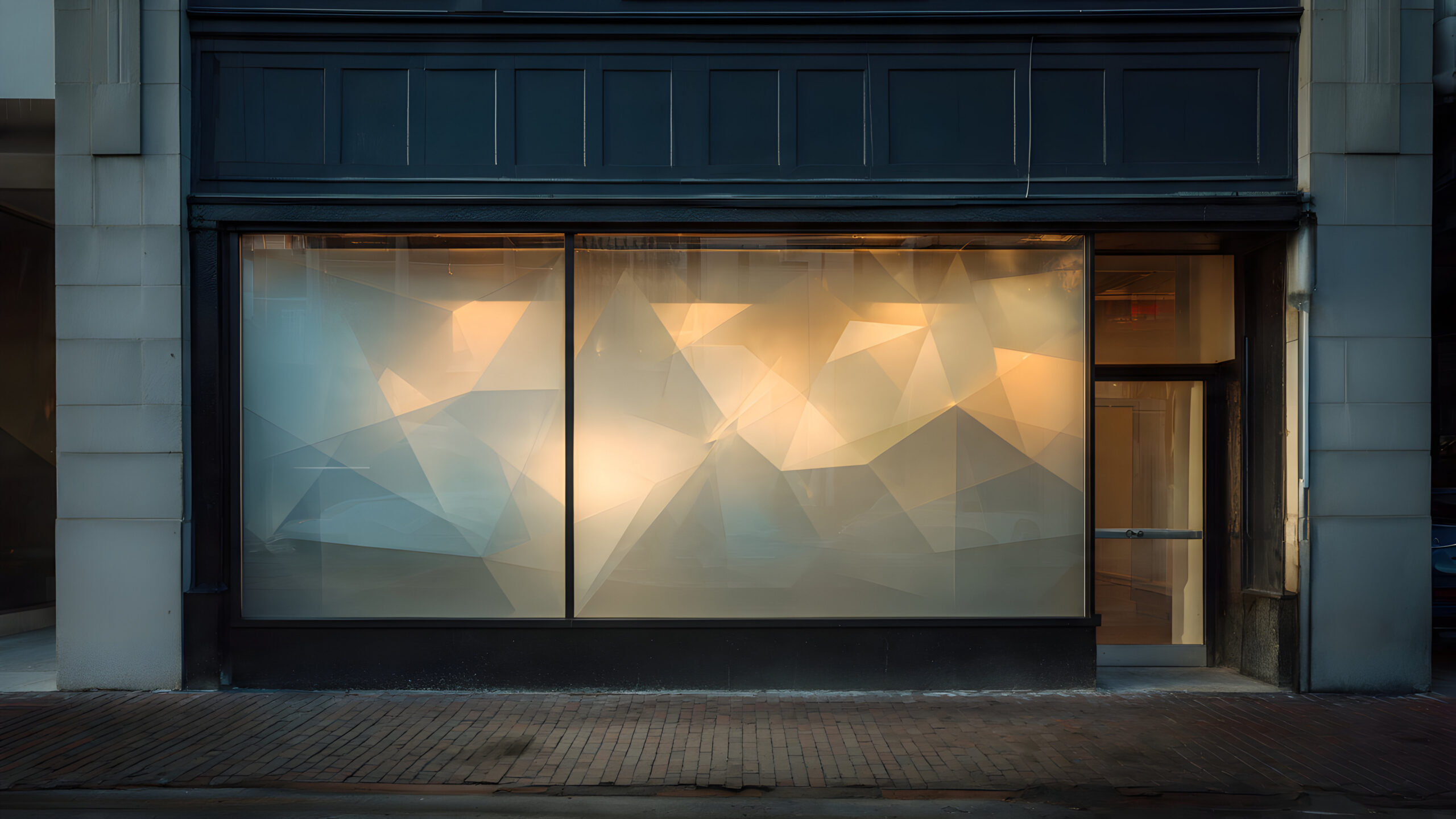
Geometric window film is a type of decorative glass film that uses intentional shapes—lines, grids, arcs, chevrons, facets, gradients, and repeating motifs—to create privacy and visual interest on glass. Unlike blinds or curtains, it stays crisp and architectural. Unlike permanently etched glass, it’s typically faster to install, easier to update later, and can be tailored to match the vibe of your space.
Popular placements in Boise & Meridian projects:
- Office glass partitions (adds privacy without losing the open, modern feel)
- Conference rooms (distraction control while keeping daylight)
- Front doors with glass (privacy for sidelites while still welcoming light)
- Bathrooms and bonus rooms (soft privacy that looks designed, not “afterthought”)
- Street-facing storefront glass (visual separation + brand-forward aesthetics)
How geometric film creates privacy (without killing daylight)
The “secret” is that privacy doesn’t have to mean darkness. Decorative films can be engineered to diffuse light rather than block it. In practice, that means the glass still glows with natural light, but direct visibility is reduced—especially once you step a few feet back from the glass.
A practical way to think about it
Higher VLT (Visible Light Transmission) = brighter rooms; often “soft” privacy.
Lower VLT = more opacity; often “stronger” privacy.
Some frosted films are even designed for two-way privacy day and night while still allowing usable light to pass through.
If you love the look of geometric patterns but want the room to stay bright, a common approach is a partial coverage layout—for example, a patterned band across eye level, a bottom-up frost, or a gradient effect that provides privacy where you need it most while preserving a clearer upper section for light and openness.
Geometric film vs. etched glass: how to choose
Etched glass can be beautiful, but it’s not always the most flexible option—especially if you’re refreshing an office suite, staging a home, or updating a storefront concept that may evolve over time. Decorative film can mimic that etched look (and go far beyond it) while staying more adaptable.
| Feature | Geometric Decorative Window Film | Etched / Sandblasted Glass |
| Look & customization | Modern patterns (grids, facets, gradients), bands, full coverage, and more | Classic frosted effect; custom designs possible but more permanent |
| Daylight | Many options designed to preserve a bright feel while diffusing views | Light still passes, but privacy zones are permanent |
| Ability to change later | Typically removable/replaceable when aesthetics or space needs change | Permanent modification to glass surface |
| Cost range (varies by design) | Decorative films can span widely (project + pattern complexity) | Etching cost varies; often quoted as an added cost per sq ft on top of glass |
| Best for | Remodels, refreshes, brand-forward offices, rentals, evolving spaces | Long-term, permanent architectural decisions |
Design note: If you’re working with an interior designer, film can be a surprisingly easy way to “echo” other geometry in the room—tile lines, slat walls, black window frames, or modern light fixtures—without adding clutter.
Quick “Did you know?” facts
Privacy can be measurable
Some frosted film lines publish both Visible Light Transmission (VLT) and a privacy rating, so you can choose “brighter” or “more private” with more confidence.
Frost can still look high-end
Embossed and textured frost styles can create a premium “architectural glass” vibe—especially on interior partitions.
Decorative film pricing varies widely
Pattern complexity, custom elements, and site conditions can swing the budget a lot—so quotes are usually the best path to accurate numbers.
Local angle: what works well in Boise & Meridian, ID
Spring light in the Treasure Valley is a mood booster—until it’s washing out a laptop screen in a glass-walled office, or leaving you feeling exposed near a busy sidewalk. Geometric window film is a smart “remodel finishing touch” because it can:
- Add privacy to street-facing glass without heavy window coverings
- Create a more intentional look in newer open-concept offices with lots of interior glazing
- Help define spaces (waiting areas, consult rooms, meeting rooms) while keeping the bright, airy feel
If you’re comparing styles, ask to see samples in your actual lighting. A pattern that feels subtle in a showroom can read bolder on a sunlit Meridian entryway—or the reverse in a shaded north-facing Boise office suite.
CTA: Get help choosing the right geometric window film
Want privacy that still feels bright and design-forward? Meridian Window Tint serves Boise, Meridian, Eagle, Nampa, and surrounding areas with professional decorative and privacy film installation (plus removal when you’re replacing older film). If you have inspiration images—gradients, grids, geometric bands—share them and we’ll help translate the look to your exact glass and lighting.
Request a Quote | Decorative Film Buying Guide | View Pricing Factors
FAQ: Geometric Window Film
Does geometric window film provide privacy at night?
It depends on the film type. Many frosted privacy films are designed to provide strong privacy day and night while still allowing light through. Patterned films can also provide privacy at night, but the level varies by opacity, coverage area, and interior lighting.
Will geometric film make my room darker?
Not necessarily. Many decorative and frosted films are selected specifically to keep spaces bright. Ask about Visible Light Transmission (VLT) so you can choose a film that matches your daylight goals.
Is decorative film a good alternative to etched glass for offices?
Yes—especially when you want a modern look on interior partitions and conference rooms without committing to a permanent glass alteration. Decorative film can deliver an etched-like effect and can be updated later if the space is rebranded or reconfigured.
What impacts the cost of geometric decorative window film?
Pricing typically depends on the pattern (stock vs. custom), how complex the layout is (full coverage vs. bands/gradients), glass size and accessibility, and project conditions. Decorative film projects often have a wide cost range for these reasons.
Can you match a geometric design to an existing brand or remodel style?
Often, yes. Many projects in Boise and Meridian use film to echo existing design cues (black window frames, warm wood tones, clean modern lines) while adding privacy at eye level. Bringing inspiration images and photos of your actual glass helps narrow options quickly.
Looking for more general window film answers? Visit our Window Film FAQs.
Glossary
VLT (Visible Light Transmission)
A measure of how much visible light passes through a film/glass system. Higher VLT usually means a brighter look; lower VLT usually means more opacity.
Diffusion
How a film scatters light to soften views. Diffusing films can increase privacy while keeping rooms bright.
Full Coverage vs. Partial Coverage
Full coverage covers the entire pane for consistent privacy; partial coverage uses bands, gradients, or lower-half frost to keep openness where you want it.
Interior Glass Partitions
Non-exterior glass walls (common in offices) that benefit from decorative film for privacy, distraction control, and a finished architectural look.