Privacy when you need it—daylight when you want it
Glass conference rooms look modern, but they can create awkward visibility during sensitive meetings, HR discussions, client calls, or clinical consults. Conference room privacy film is a fast, low-disruption way to add visual separation while keeping an open, bright feel—especially compared to blinds, curtains, or replacing glass. For Boise-area offices planning ahead for busier spring and summer schedules, it’s one of the most practical “weekend-ready” upgrades you can make.
What conference room privacy film actually does
Privacy film is a professionally installed window film applied to interior glass (most commonly on conference rooms, sidelites, and glass partitions). Depending on the film style, it can:
• Obscure direct sightlines while keeping the room bright
• Reduce visual distractions in open-plan layouts
• Add a consistent, architectural “etched glass” look without replacing glazing
• Support brand aesthetics with patterns, banding, or custom layouts
Many decorative privacy films used on interior glazing are designed for commercial wear—cleanable and suitable for high-traffic environments when installed correctly.
The most popular privacy looks for modern offices
Most Boise businesses want privacy that feels intentional—not like an afterthought. The top-performing styles typically include:
1) Frosted / matte film
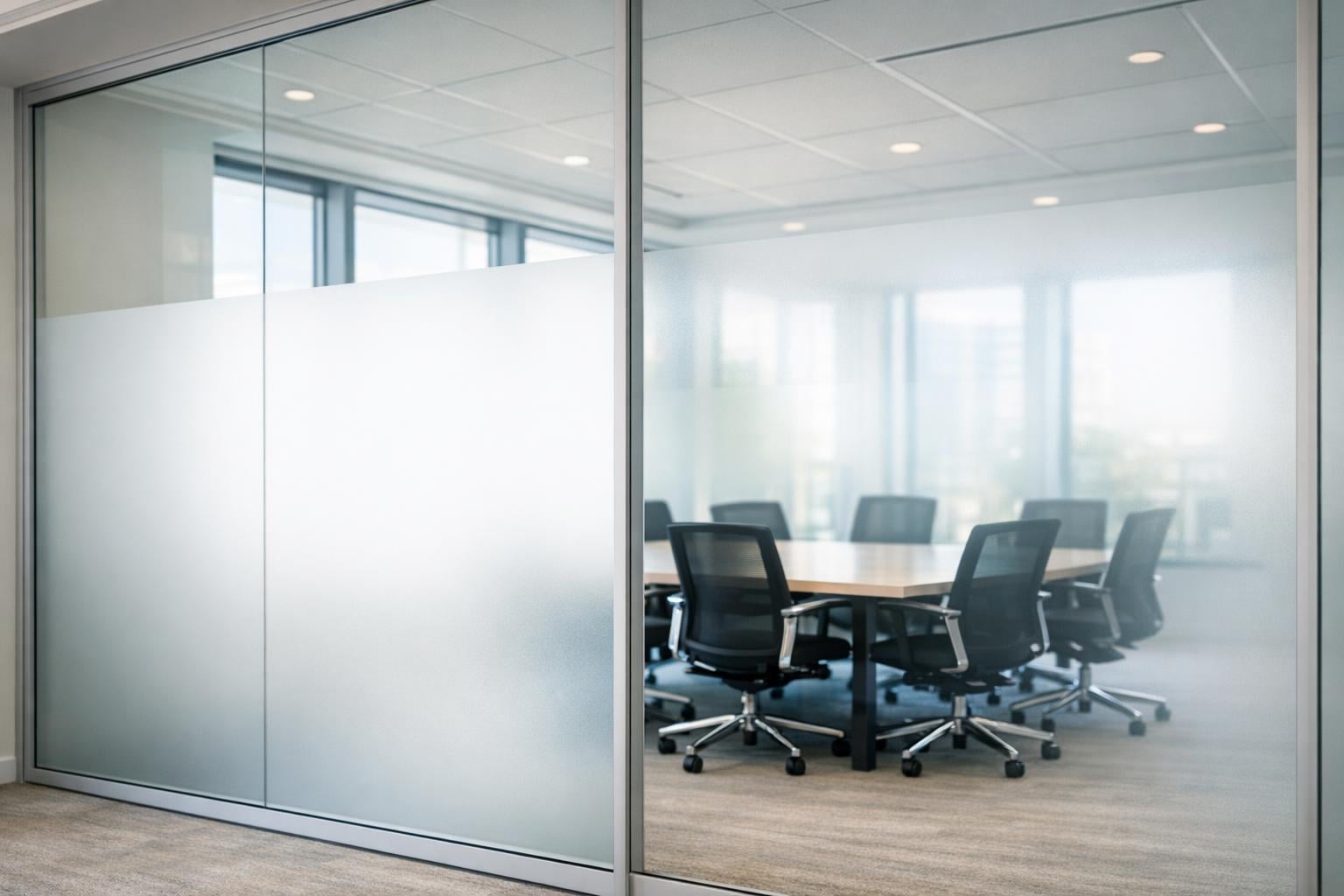
The “clean etched glass” look. Excellent for consistent privacy on interior partitions and conference rooms, while still allowing light through.
The “clean etched glass” look. Excellent for consistent privacy on interior partitions and conference rooms, while still allowing light through.
2) Gradient film
Clear at the top (keeps the airy feel), frosted through the mid-zone (blocks eye-level sightlines). Great for rooms that want privacy while standing or seated.
Clear at the top (keeps the airy feel), frosted through the mid-zone (blocks eye-level sightlines). Great for rooms that want privacy while standing or seated.
3) Patterned decorative film
Stripes, linen textures, dots, and geometric patterns can “soften” visual distractions and bring design cohesion to glass-heavy interiors.
Stripes, linen textures, dots, and geometric patterns can “soften” visual distractions and bring design cohesion to glass-heavy interiors.
Privacy vs. sun control: don’t mix up the goal
Conference rooms sometimes struggle with two different problems:
Privacy (interior glass): People can see in. Solution is usually frosted, gradient, or patterned decorative film on partitions and door glass.
Heat/glare (exterior windows): Afternoon sun makes meetings uncomfortable. A spectrally selective sun control film can help reduce glare, block UV, and reject infrared heat without turning windows overly reflective. 3M notes some Prestige Series films can reject up to 97% infrared and 99.9% UV.
Many offices use both: decorative privacy film on interior partitions + sun control film on exterior glass. The right plan depends on which glass surfaces are causing the problem.
Quick comparison table: which conference room privacy film is best?
| Film style | Best for | Privacy level | Light / openness | Notes |
|---|---|---|---|---|
| Frosted / matte | Conference rooms, clinics, HR offices | High (diffuses view) | High | Classic “etched glass” look; typically installed on interior glazing. |
| Gradient | Maintaining openness while blocking eye-level sightlines | Medium–High | Very high (clear above) | Great balance for executive rooms and client-facing spaces. |
| Patterned decorative | Brand-forward interiors, lobbies, glass corridors | Medium (varies) | High | Stripes/linen/dots can reduce distractions and define zones. |
| Banded frosting | Code-friendly “manifestation” + privacy | Medium | Very high | Often used as one or two horizontal bands at key sightline heights. |
Pro note for office managers:
If your goal is true visual privacy for confidential discussions, focus on eye-level opacity (seated and standing) and door glass first. Many rooms “leak privacy” at the entry, not the wall of glass everyone notices.
A practical step-by-step plan for choosing the right film
1) Define “privacy” in plain terms
Decide what “private” means for your room: blurred silhouettes acceptable, or no recognizable faces at all? Many offices prefer a solution that blocks details at eye level but still allows light to travel through the space.
2) Map sightlines (standing + seated)
Walk the hallway and lobby lines where visitors approach. Mark the height range where you want diffusion (common approaches: a frosted band, or a gradient that fades to clear above).
3) Decide whether you need brand alignment
Pattern scale matters. Thin stripes can look crisp and modern; linen textures soften a medical or clinical feel; dots/geometric patterns can echo brand motifs. Decorative film is commonly used for conference rooms and lobbies for exactly this reason.
4) Confirm cleaning & maintenance expectations
Glass partitions get touched—constantly. Choose a film intended for interior glazing and confirm cleaning instructions after installation (timing matters during the initial cure period).
5) Use a professional installer and standards-based approach
Long-term results come down to layout, alignment across panes, edge finishing, and a clean install environment—especially on glass doors and framed partition systems. Industry groups like the International Window Film Association (IWFA) emphasize understanding the buying and installation process, and their technical resources are widely referenced across the trade.
Budget & timeline tip:
If you’re refreshing multiple rooms, phase installs by floor or department. It keeps meetings moving and reduces disruption.
Tenant improvement tip:
Decorative film can be a lease-friendly alternative to replacing glass, and many products are designed to be removable when layouts change.
Helpful pages from Meridian Window Tint:
Boise, Idaho local angle: why conference rooms feel “more exposed” in spring and summer
In Boise, longer daylight hours and stronger afternoon sun can make glass-heavy offices feel more “on display,” especially if your conference rooms face common areas or street-side windows. That’s also when teams tend to schedule more hiring, training, and client meetings. Privacy film helps you keep the clean, modern architecture that glass brings—while adding the functional separation a busy office needs.
If your room also overheats:
Consider pairing interior privacy film with a separate, purpose-built sun control film on exterior-facing windows. 3M notes that Prestige Series sun control films can reject significant infrared heat and nearly all UV while maintaining a low-reflective look.
Get a conference room privacy film quote in Boise
Meridian Window Tint helps Boise-area offices choose privacy film that looks intentional, installs cleanly, and supports daily operations. If you want a recommendation based on your glass layout, sightlines, and timeline, request a quote.
Request a Free Quote
Boise • Meridian • Eagle • Nampa
FAQ: Conference room privacy film
Does privacy film work at night?
Frosted, matte, and patterned films provide privacy by diffusing visibility—so they work day and night. If you’re considering a reflective look for privacy, keep in mind that reflectivity-based privacy can change with lighting conditions (brighter side “wins”).
Will it make our office feel closed in?
Not if it’s designed around sightlines. Gradients and banded frosting are popular because they preserve openness above eye level while still protecting meeting privacy.
Can privacy film be applied to glass doors and sidelites?
Yes—those are common “hot spots” for visibility. A consistent layout across doors and adjacent panes is key so the finish looks intentional.
How do we estimate cost for multiple conference rooms?
Most quotes are based on glass size, film type, and layout complexity (full coverage vs. bands vs. gradients). For a rough planning range, start with measurements and then confirm with an on-site assessment. You can also review Meridian Window Tint’s Pricing Guide.
Do you offer security film for commercial buildings?
Yes—Meridian Window Tint offers commercial security window film options. If security is part of your project scope, it’s best to review goals, glass type, and attachment details so the recommendation matches the application.
Glossary (helpful terms you’ll hear during an office film quote)
Decorative window film
A film used to change the look of glass (frosted, patterned, gradient) and manage privacy on interior glazing.
Gradient film
A privacy film that transitions from more opaque to more clear, often used to block eye-level visibility while keeping the top portion open.
Manifestation (visibility marking)
A marking, band, or pattern placed on glass (often at key heights) to make transparent partitions easier to see and reduce accidental collisions.
Spectrally selective sun control film
A type of window film engineered to reduce infrared heat and UV while preserving visible light and maintaining a low-reflective look.