
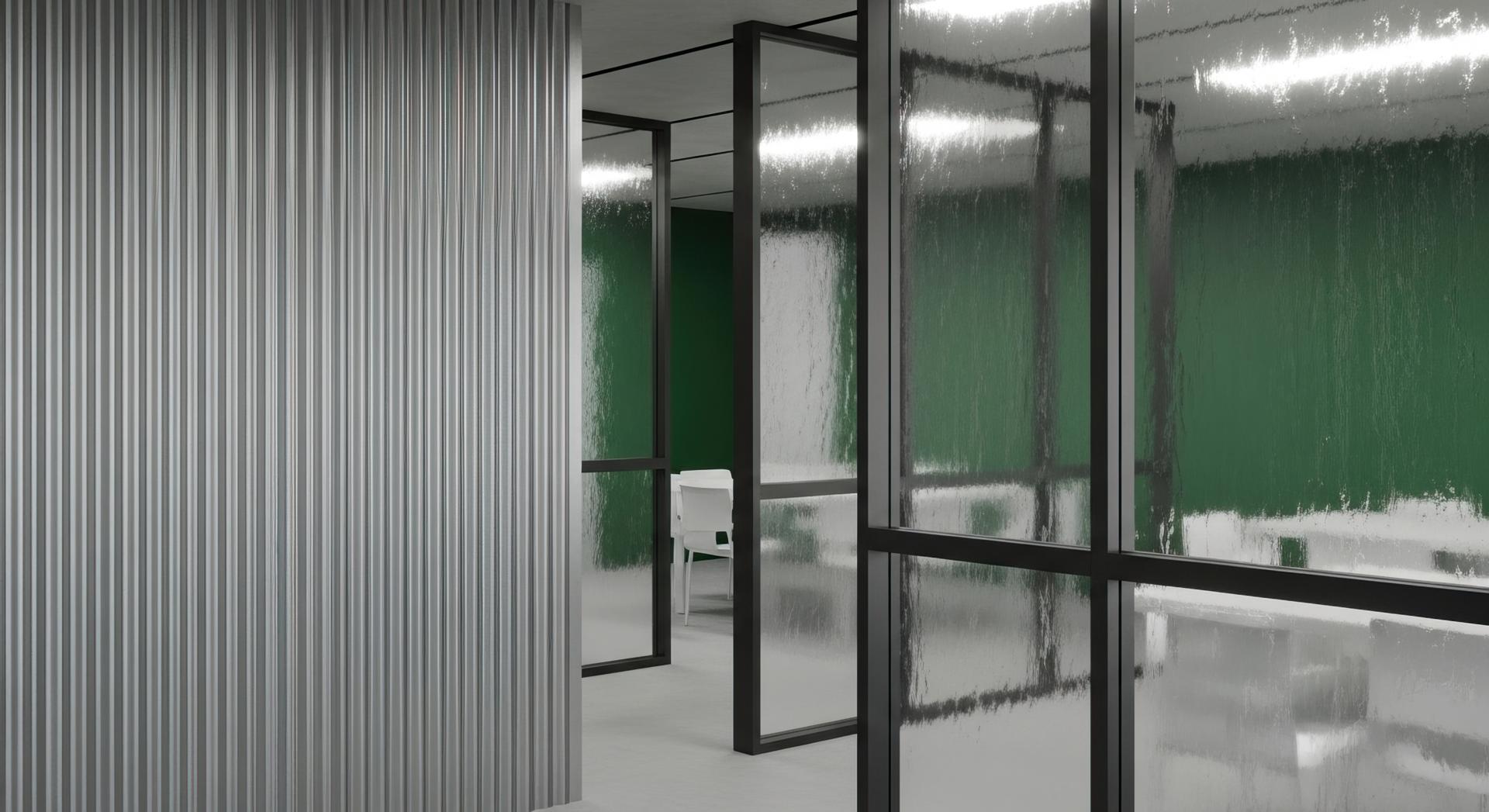
A designer texture for kitchens, offices, and remodels—installed on your existing glass
Fluted (also called “reeded”) glass is having a moment in Boise-area remodels—especially on cabinet doors, pantries, interior doors, sidelites, and office partitions. The challenge: real reeded glass can mean custom ordering, longer lead times, and higher cost. Fluted glass window film delivers the same vertical-ribbed vibe on smooth glass, while diffusing views and keeping spaces bright. At Meridian Window Tint, we help homeowners and businesses in Boise, Meridian, Eagle, and Nampa choose decorative films that match their style goals and practical needs—then install to IWFA inspection guidelines for a clean, professional finish.
What “fluted glass film” actually does (and what it doesn’t)
Fluted glass window film is a decorative privacy film designed to mimic the look of reeded glass. The vertical “channels” visually break up the view through the glass, creating distortion and light diffusion—so you get privacy without making the window feel “blocked.” Many reeded-style films are very high light-transmission, meaning they still feel airy in kitchens, entryways, and open-plan living spaces.
Important reality check: like most decorative privacy solutions, reeded/fluted effects are primarily “daytime privacy.” At night, if your interior lights are brighter than outside, silhouettes can become more noticeable—so you may still want layered window treatments in certain rooms (or choose a more opaque decorative option in sensitive areas).
Where fluted (reeded) film looks best in Boise homes
Kitchen cabinet glass & pantry doors
Want the “reeded glass cabinet” look without replacing doors? Fluted film can add texture and blur dishware clutter while still letting light reflect around the room—great for bright, modern Boise kitchens.
Home offices & glass partitions
If you’re building a glass-walled office or upgrading a den, fluted film keeps the space feeling open while reducing distractions and creating a clean, architectural finish.
Front doors, sidelites, and interior doors
Reeded-style film is a smart way to soften direct sightlines—especially on entry glass—without going full frosting across the entire pane.
Bathrooms (with the right expectations)
For bathrooms, fluted film can work well on windows where you still want daylight. If you need maximum privacy at night, we’ll steer you toward a denser/frosted decorative finish or a layered solution.
Pro tip: Vertical orientation usually looks most like authentic reeded glass and tends to feel “taller” and more tailored on doors and cabinets.
Fluted film vs. frosted film vs. patterned decorative film
| Option | Look & feel | Privacy style | Best use | Watch-outs |
|---|---|---|---|---|
| Fluted / Reeded film | Vertical ribbed texture; “designer glass” vibe | Distortion + diffusion; often bright | Cabinets, pantries, offices, doors, sidelites | Night privacy may still need shades depending on lighting |
| Frosted / Etched-look film | Soft matte finish; clean and minimal | More uniform obscurity | Bathrooms, bedrooms, street-facing windows, interior partitions | Can feel more “blocked” vs reeded in small rooms |
| Patterned / Gradation decorative film | Design-forward (lines, geometrics, fade bands) | Customizable—privacy where you need it | Street-level offices, conference rooms, entry glass | Pattern alignment and seams require careful planning |
If you want a premium decorative line with a wide design library, 3M™ FASARA™ Glass Finishes are designed to diffuse light while maintaining a level of privacy and are offered in many patterns and textures—making them a strong choice for upscale remodel aesthetics and consistent results.
Did you know? Quick facts Boise remodelers love
Fluted film is a “swap the look” upgrade.
You can transform plain glass into a reeded-glass style without ordering new glazing—helpful when you’re coordinating cabinet hardware, counters, and paint schedules.
Most films are interior-applied.
Unless a film is specifically made for exterior installation, it should be installed on the inside surface of the glass for best durability.
“Perfect” is not the expectation—professional is.
Window film is installed using a slip solution; a short curing period is normal before full adhesion, and industry guidelines note installed film won’t visually match raw glass.
How to choose the right fluted glass window film (step-by-step)
1) Start with the goal: style, privacy, or both
If you want the strongest “reeded glass” look, choose a crisp vertical rib pattern. If privacy is the primary goal (bathrooms, street-facing windows), we may recommend pairing reeded texture with a more obscuring finish—or choosing frosted/etched instead.
2) Pick the flute width that matches your scale
Narrow flutes feel modern and detailed (great for cabinet doors and smaller panes). Wider flutes read more “statement” on full-height doors and interior partitions. In Boise remodels, we often match flute scale to nearby lines—like Shaker cabinetry, slat walls, or linear light fixtures.
3) Plan your privacy for nighttime lighting
Any film that relies on distortion can appear less private when it’s bright inside and dark outside. If this is a concern, we’ll talk through room lighting, sightlines, and whether you want a film that becomes more opaque.
4) Measure correctly to avoid seams and misalignment
Decorative films look best with clean edge work and consistent pattern alignment. If you’re gathering measurements for a quote, use our guide so we can recommend the right layout and reduce the chance of visible seams.
5) Decide: DIY kit film or pro-installed decorative film
DIY can work for small, forgiving panes. For high-visibility glass (entry doors, offices, large picture windows, or patterned films that must line up), professional installation is worth it for edge quality, alignment, and long-term appearance—especially when you’re paying for premium finishes.
Want to budget early? Check our Boise window tinting pricing guide for typical cost factors (window size, access, film type, and complexity).
A Boise-specific note: spring sun, glare, and “bright-but-private” rooms
In Boise and the Treasure Valley, spring remodel season often overlaps with big daylight swings—more sun hours, stronger glare on east/west windows, and more time spent at home in bright spaces. Decorative fluted film is popular because it keeps rooms feeling open while reducing direct sightlines. If glare or heat is also part of your problem (home offices, living rooms with large glazing), we can help you compare decorative privacy options alongside residential window tinting solutions that focus on comfort and UV protection.
Ready for the fluted-glass look?
Tell us what you’re updating (cabinet doors, pantry, office, entry glass), and we’ll recommend a decorative film that fits your privacy goals and your finishes—then install it cleanly and professionally.
FAQ: Fluted glass window film
Does fluted (reeded) window film give full privacy at night?
It depends on lighting. If your interior is brighter than outdoors, shapes can be more visible. For rooms that need strong nighttime privacy, consider a more opaque decorative film or add shades/curtains.
Can you install fluted film on textured or already-reeded glass?
Most films are designed for smooth glass. If one side is smooth and the other is textured, installation may be possible on the smooth side—our team will confirm your glass type during the estimate so the film adheres correctly and looks clean.
Will fluted film work on shower glass?
Some shower enclosures are coated or textured, and bathrooms bring humidity and cleaning chemicals into the mix. We’ll evaluate the glass and placement to recommend a film that’s appropriate—or suggest an alternative if it’s not a good match.
How long does decorative window film take to “settle” after install?
A curing period is normal because installation uses a solution to position the film, and full adhesion takes time. We’ll provide aftercare instructions and what to expect as it dries.
Can you remove old film before installing new fluted film?
Yes—proper removal matters if an older film is bubbling, scratched, or leaving adhesive behind. Learn more about residential film removal or commercial film removal.
Is fluted film only for homes, or can businesses use it too?
It’s popular in both. Offices use it on conference rooms and interior glazing to add privacy and a modern design element without building a wall or replacing glass.
Glossary (quick, helpful definitions)
Fluted / Reeded glass
Glass with vertical ribs that distort the view and add texture. “Fluted” and “reeded” are commonly used interchangeably.
Decorative window film
Film designed to change the appearance of glass (frosted, patterned, textured) while managing privacy and light.
VLT (Visible Light Transmission)
A measure of how much visible light passes through the glass/film system. Higher VLT means a brighter look.
Curing
The period after installation when remaining moisture dissipates and the adhesive fully sets. Appearance can subtly improve as curing completes.
If you’re planning a Boise-area kitchen refresh, an office upgrade, or a modern entry makeover, fluted glass window film is one of the fastest ways to get that textured, high-end feel—without the custom glass timeline.